[NOTE] Mastering Heat: The World of Thermal Management
2025.09.18 10:39:1
As electronic devices become smaller and more powerful, the heat generated by high-performance chipsets and batteries has become an unavoidable challenge. If that heat is not properly managed, it can lead to performance drops, shortened product lifespans, and even system failures. Thermal management is the science of controlling and dissipating this heat. By efficiently transferring or dispersing excess heat from inside a device, thermal management ensures that products operate at peak performance, remain stable over time, and deliver a safe user experience. From smartphones to AI servers to electric vehicle batteries, every advanced technology is engaged in an invisible battle against heat.
Why Thermal Management Matters? A small difference can change the entire product lifecycle.
Core components such as semiconductors, batteries, and modules are highly sensitive to prolonged exposure to heat.
Without proper cooling, several risks arise:
- Performance degradation: Overheating triggers “throttling”, where the device automatically slows itself down to prevent damage.
- Reduced stability: Unexpected errors or shutdowns can occur.
- Shortened lifespan: Repeated thermal stress leads to component wear and degradation, reducing overall product life.
- Poor user experience: Devices become uncomfortably hot to handle.
Therefore, thermal management is not just about “cooling things down”. It is a critical technology that safeguards product reliability and long-term sustainability.
The Fundamentals of Heat Transfer How Heat Moves: Conduction → Convection → Radiation
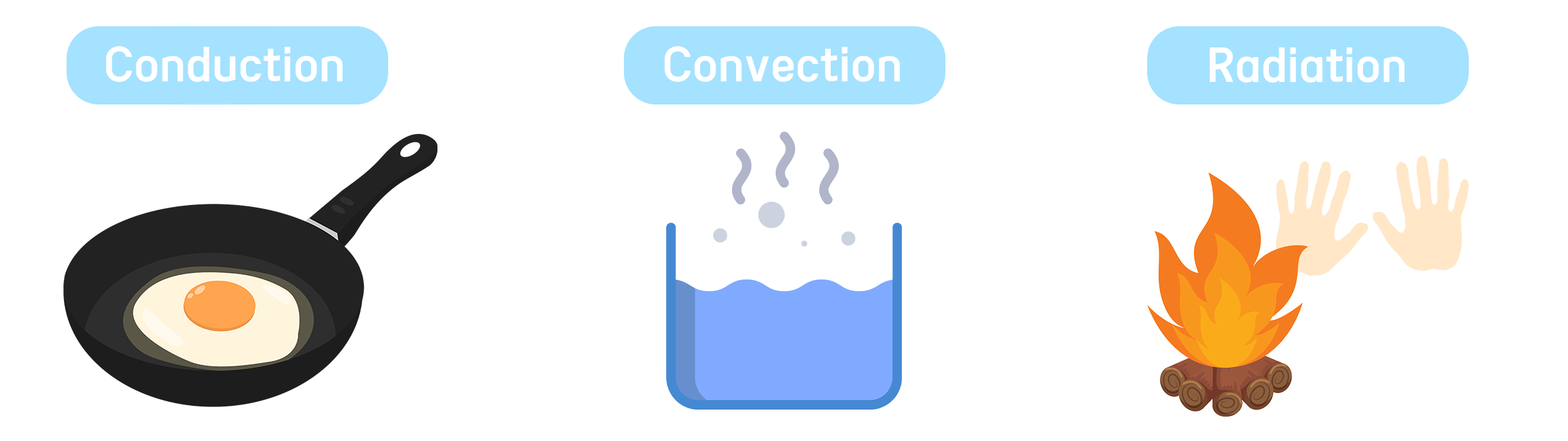
The core of thermal management lies in understanding and controlling how heat travels. Heat moves in three main ways:
- Conduction : Heat transfer through solids as molecules vibrate. Thermal pad and thermal grease leverage this principle to move heat from components efficiently.
- Convection : Heat is carried away by liquids or gases. Cooling fans and heatsinks rely on this mechanism to disperse heat into the air.
- Radiation : Heat is emitted as infrared energy, especially relevant in high-temperature or vacuum environments.
In most electronic devices, heat usually flows through conduction → convection. Therefore, selecting the appropriate thermal interface materials (TIMs) and considering the operating environment are crucial.
Where Thermal Management Is Applied From Smartphones to Spacecraft
Thermal management technologies are applied far more widely than most people realize.
- Consumer electronics : Smartphones, laptops, tablets
- Electric vehicles (EVs) & batteries : Stable temperature control of battery cells
- Industrial equipment : Servers, motors, controllers
- Medical & precision devices : Protecting high-sensitivity sensors and instruments
- Aerospace & defense : Reliable heat control in vacuum and extreme conditions
In this way, thermal management serves as a vital technological infrastructure that supports the performance and safety of modern industries.
Conclusion: Controlling Heat, Driving Innovation Those who control heat, control technology.
As products become smaller and more complex, thermal challenges grow larger. Thermal management has evolved into a key factor that determines competitiveness in every industry.
At 3C Tae Yang, we deliver customized thermal solutions optimized for diverse environments, ensuring our clients’ products operate more powerfully, reliably, and safely.
To truly innovate, we must not only create technology but also effectively understand and manage the heat. In today’s rapidly evolving electronics and energy sectors, thermal management is no longer optional; it is the hidden foundation that makes every breakthrough possible.