Every electronic system, whether it’s a smartphone, a battery pack, or a semiconductor device, generates heat during operation. If left unchecked, this heat can degrade performance, cause malfunctions, and shorten the overall lifespan of the product. The solution lies in thermal management products, which are essential to regulate and dissipate heat effectively and keep devices running at their best.
1. Thermal Pads
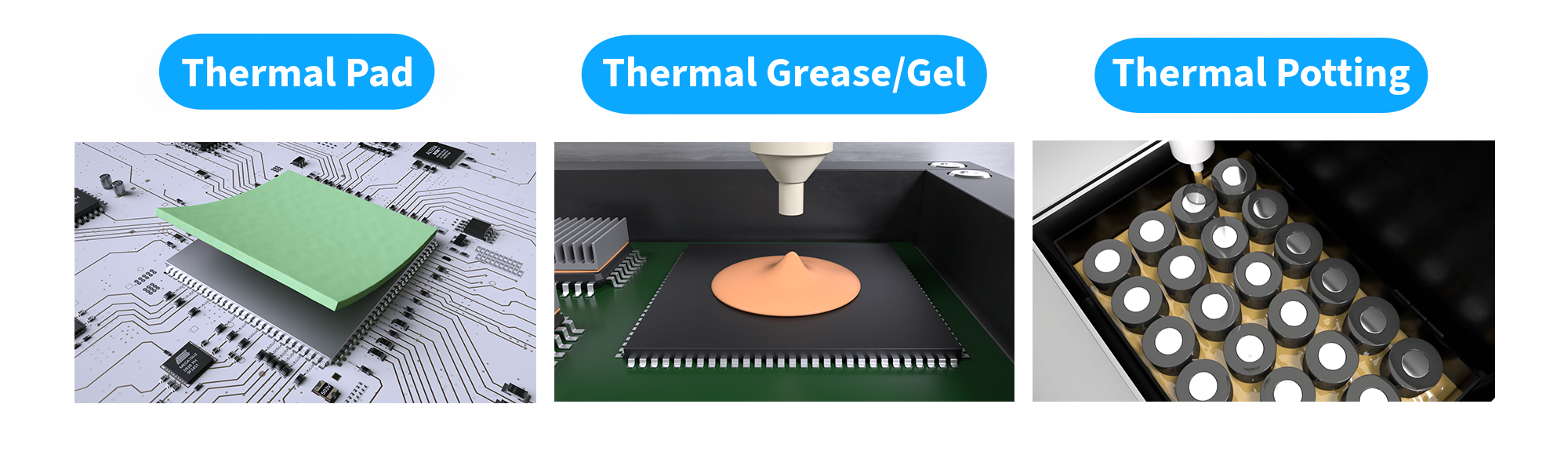
Thermal pads, also known as thermal gap pads, are among the most widely used thermal interface materials (TIMs). Soft and flexible, often compared to the texture of an eraser, these pads are designed to fill the tiny gaps between heat sources (such as processors or batteries) and heatsinks or casings. By eliminating air pockets and creating consistent surface contact, thermal pads enable efficient heat transfer and improve overall system reliability.
One of their biggest advantages is versatility. Thermal pads can be easily cut or shaped to fit different designs, and their simple installation makes them suitable for a wide range of applications, from consumer electronics to automotive systems.2. Graphite Sheet
Graphite sheets are valued for their ultra-thin, lightweight structure and exceptional thermal conductivity. They are particularly useful in compact devices like smartphones, tablets, and lightweight displays, where space is limited but heat must be carefully managed.
Natural graphite sheets are more cost-effective and easy to mass-produce, while synthetic graphite sheets deliver higher performance, making them ideal for advanced electronics and demanding industrial applications.3. Thermal Grease
Thermal grease, also referred to as thermal paste, is one of the most familiar thermal interface materials, especially in the world of computers and semiconductor assembly. With its cream-like texture, it is applied in thin layers between a processor and a heatsink to create a highly conductive thermal pathway. By filling even the smallest microscopic gaps, thermal grease ensures efficient heat transfer where precision matters most.
Due to its relatively high viscosity, thermal grease requires careful application to achieve the best results. Its widespread use in PC building and electronics community highlights its importance as a mainstream thermal solution.4. Thermal Gel
Thermal gels offer greater flowability than grease, allowing them to spread easily across uneven or irregular surfaces. This makes them particularly useful for complex geometries or surfaces that are difficult to cover with traditional materials.
Certain formulations also cure over time, hardening to a texture similar to thermal pads, combining the flexibility of a gel during assembly with long-term stability once in use. At 3C Tae Yang, we provide advanced thermal gel products that harden into a resilient structure, ensuring both ease of application and reliable heat transfer in demanding environments.5. Thermal Potting
Thermal potting compounds are liquid-based materials that are poured over or around sensitive components, then cured into a solid protective layer. This unique approach not only enables efficient heat dissipation but also provides mechanical protection, shielding delicate parts from vibration, moisture, dust, and other environmental stresses.
One of the greatest strengths of thermal potting is its ability to deliver dual functionality: managing heat while simultaneously enhancing durability and safety. This makes it particularly valuable in battery modules, where components must remain both cool and secure under demanding operating conditions.Why Choosing the Right Thermal Product Matters?
Each thermal management solution, whether a pad, grease, gel, or potting compound, comes with unique properties, advantages, and trade-offs. The right solution depends on:
- The application environment (compact electronics vs. heavy-duty machinery).
- The desired thermal conductivity and thickness.
- Whether flexibility, reusability, or protection is required.
At 3C Tae Yang (THS), we provide a full portfolio of thermal interface materials, from pads and gels to potting compounds. With decades of expertise in both manufacturing and materials engineering, we help customers across industries select and apply the most effective solution for their needs.